Billionaires Spielberg, Zuckerberg look outside of California amid wealth tax proposal

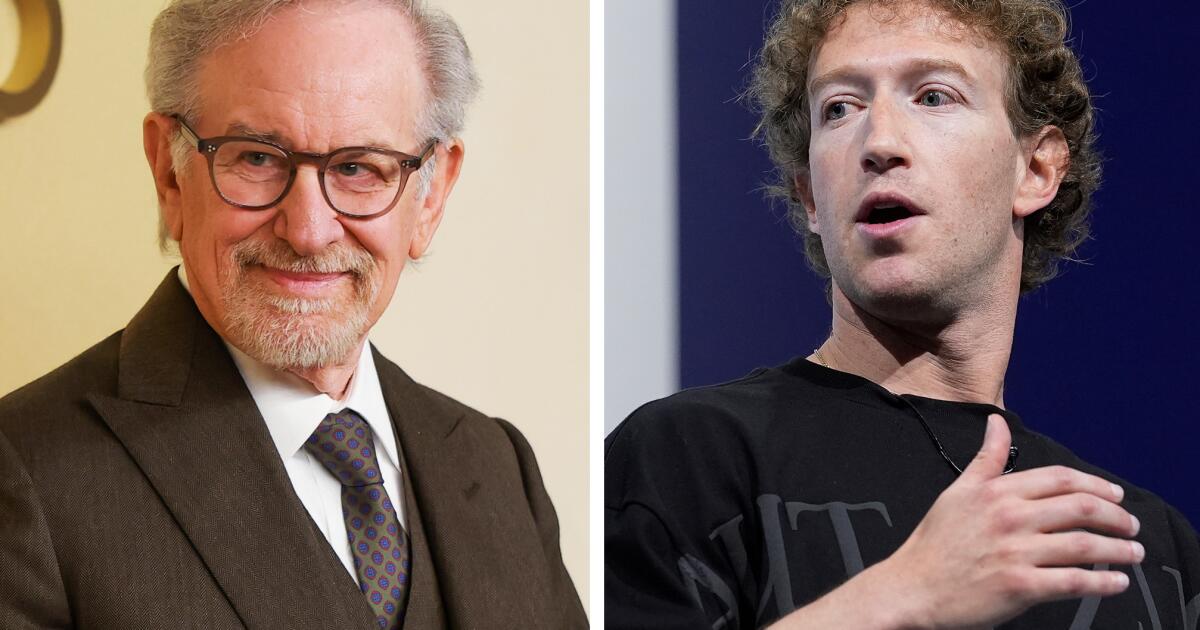
California may have lost two of its most popular citizens and generous political donors.
Filmmaker Steven Spielberg recently moved to New York and Facebook founder Mark Zuckerberg is looking to buy a new property in Florida, sparking speculation about whether their decisions are related to a proposed new tax on California billionaires to fund health care for the state’s most vulnerable citizens.
Although a number of prominent conservatives from California blamed their departure on the controversial wealth tax measure, as well as the state’s liberal approach and what they described as heavy business regulations, neither Zuckerberg nor Spielberg gave any indication that the tax proposal was the reason for their departure.
A spokesman for Spielberg, who has had homes on the East and West coasts since at least the mid-1990s, said the only reason Spielberg and his wife, actress Kate Capshaw, settled in Manhattan was to be close to family.
“Steven’s move to the East Coast has been planned for a long time and is driven by his and Kate Capshaw’s desire to be closer to their New York-based children and grandchildren,” said Terry Press, a spokesperson for the iconic filmmaker. He declined to answer questions about his position on the proposed ballot measure.
Director Steven Spielberg presents President Bill Clinton with the Ambassadors Humanity Award at the 5th Annual Ambassadors for Humanity Dinner Honoring former President Bill Clinton to support the Survivors of the Shoah Visual History Foundation at the Amblin Theater Universal Studios on February 17, 2005 in Los Angeles, California.
(Frazer Harrison/Getty Images)
On Jan. 1, Spielberg and Capshaw officially became New York City residents, settling in the historic San Remo co-op on Central Park West. This storied building is among the most exclusive in Manhattan, having been home to Bono, Mick Jagger, Warren Beatty, Tiger Woods and many other celebrities. That same day, Spielberg’s Amblin Entertainment opened an office in New York City.
Zuckerberg and his wife, pediatrician Priscilla Chan, are considering buying a $200 million waterfront mansion in South Florida, the Wall Street Journal first reported this month. The property is located on Miami’s Indian Creek, a gated island that is home to the rich and powerful, including Amazon founder Jeff Bezos and Trump’s daughter Ivanka and her husband, Jared Kushner.
Representatives for Zuckerberg declined to comment.
The billionaires’ move has raised eyebrows because it comes as supporters of a proposed 5% tax on the assets of California billionaires and trusts are gathering signatures to qualify the measure for the November ballot. Led by the Service Employees International Union-United Healthcare Workers West, they must collect the signatures of nearly 875,000 registered voters and send them to county election officials by June 24.
If approved, the tax would raise nearly $100 billion to pay mostly for health care services, as well as other education programs. Critics say it will drive the wealthy and their companies out of government. On December 31, venture capitalist David Sacks announced that he was opening an office in Austin, Texas, the same day PayPal founder Peter Thiel announced that his company had opened a new office in Miami.
The proposed ballot measure, if eligible for the ballot and approved by voters, would apply to Californians who are state residents beginning in 2026. But the residency requirements are murky. Among the factors considered by the state’s Franchise Tax Board is where a person is registered to vote, where they live, how much time they have spent in California, where their driver’s license was issued and their vehicles registered, where their spouses and children live, the location of doctors, dentists, accountants and lawyers, and their “community affiliation,” such as their group’s place of worship or parish.
It is unclear whether the proposal will be up for a vote in November, and if it is, whether voters will approve it. However, the migration of a large number of the state’s billionaires – more than 200 people – would have a significant impact on the state’s income, however. The state’s budget volatility has resulted from a heavy reliance on taxes paid by the state’s wealthiest citizens, including capital gains taxes and stock-based compensation.
“High-income Californians pay the largest share of state income taxes,” according to Gov. Gavin Newsom’s 2026-27 was published in January. “A significant portion of the personal income tax — the largest source of General Fund revenue — paid by a small portion of taxpayers increases the difficulty of predicting personal tax revenue.”
This reliance on wealthy Californians is one of the reasons the proposed multimillion-dollar tax has caused tension among Democrats and is a source of contention in the 2026 gubernatorial race to replace Newsom, who cannot seek another term and is weighing a presidential bid. He opposes the motion; Sen. Bernie Sanders (VT.) campaigned Wednesday evening at the Wiltern in Los Angeles.
“Not only do I support what they’re trying to do in California, but we’re going to introduce a wealth tax across the country. We have to deal with the greed, the extraordinary greed, of the millionaire class,” Sanders told reporters on Feb. 11.
Zuckerberg and Spielberg are both successful political donors, although it is difficult to fully account for their contributions to candidates, campaigns and other organizations because of how they or their associates donate to them and the complexity of campaign finance reporting.
Spielberg, 79, a Hollywood legend, is worth more than $7 billion, according to Forbes. He and his wife have donated almost universally to Democratic candidates and causes, according to Open Secrets, a non-profit, non-partisan tracker of federal campaign contributions, and the California secretary of state’s office.
The filmmaker, who gained fame with films like “Schindler’s List,” “Jaws,” “Jurassic Park” and the “Indiana Jones” trilogy, was born in Ohio and lived with his family in several states before moving to California. He attended Cal State Long Beach but dropped out after Universal Studios offered him a contract to direct television shows.
Zuckerberg, 41, launched Facebook while in college and is worth more than $219 billion, making him one of the richest people in the world, according to Forbes.
His largest political donation appears to be $1 million to FWD.us, a group focused on criminal justice and immigration reform nationwide, according to Open Secrets.
Zuckerberg, currently a registered Democrat in Santa Clara County, has donated to politicians across the spectrum, including Democrats like former House Speaker Nancy Pelosi and current Senate Minority Leader Chuck Schumer to Republicans like President Trump’s Secretary of State Marco Rubio when he ran for the White House and Chris Christie during his gubernatorial campaign in New Jersey.
Both men’s contributions do not include their other effects on campaign finances – Spielberg has helped dozens of Democratic politicians raise money in Hollywood; Zuckerberg’s company has made other contributions. Meta – the parent company of Facebook, Instagram and WhatsApp – donated $ 1 million to the Trump inauguration committee in December 2024. Zuckerberg later attended the presidential inauguration in the US Capitol Rotunda.
Zuckerberg, who was born in White Plains, NY, created the first prototype of Facebook while at Harvard University and stopped moving to Silicon Valley to perfect the social network, as depicted in the award-winning film “The Social Network.”
He still owns a number of properties in California and elsewhere, including a controversial, large estate on Kauai that includes two mansions, dozens of bedrooms, several other buildings and resorts — and a basement with a cast iron door, according to a 2023 investigation by Wired. Land acquisition and construction costs are reported to have reached $300 million.
Meta is based in Menlo Park, Calif., although it has been incorporated in Delaware since Facebook was founded in 2004.
Times staff writer Queenie Wong contributed to this report.